
Parents often ask one important question before enrolling their child in martial arts classes: What is the best age for karate? The answer depends on your child’s personality, focus level, confidence, and physical development. However, most martial arts experts agree that children can begin learning basic karate skills between the ages of 4 and 6.
Karate is not only about punches and kicks. It teaches discipline, confidence, focus, respect, self-control, and fitness. In cities like Faisalabad, more parents are now searching for structured activities that help children stay active while improving mental strength and social skills. This is why interest in karate kids Faisalabad programs has grown significantly in recent years.
In this complete guide, we’ll explain the ideal age to start karate, the benefits for different age groups, what parents should consider before enrolling their child, and how karate supports long-term child development.
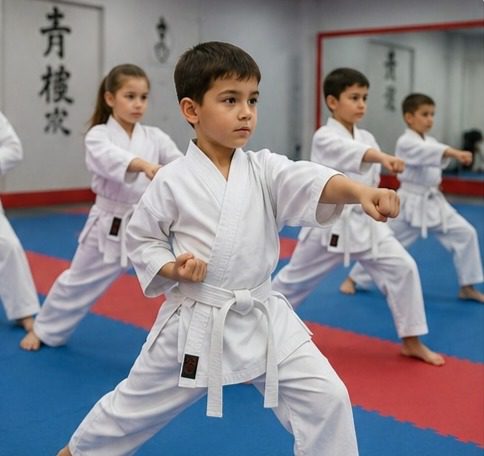
Why Parents Choose Karate for Their Kids
Today, many parents want activities that improve both the physical and mental development of their children. Karate is one of the few activities that combines fitness, discipline, confidence building, and self-defense in a structured learning environment. It helps children become more active, focused, respectful, and socially confident while also reducing screen time and unhealthy habits.
Here are some major benefits of karate training for children:
- Improves discipline and listening skills
- Builds confidence and self-esteem
- Increases flexibility and coordination
- Helps children stay physically active
- Teaches respect and patience
- Encourages goal setting and achievement
- Supports focus in school and daily life
- Helps shy children become socially confident
Unlike many sports that focus only on competition, karate also focuses on character development and emotional control. Parents searching for the best age for karate often choose martial arts because it supports long-term character development rather than focusing only on competition or physical performance.
What Is the Best Age for Karate?
The best age for karate usually falls between 4 and 6 years old. At this stage, children can begin understanding instructions, following routines, and interacting with instructors in a group environment. However, every child develops differently. Some children are ready earlier, while others may perform better when starting at age 7 or 8.
Let’s break it down by age group.
Karate for Ages 3–4: Early Introduction Stage
Children between the ages of 3 and 4 can begin learning karate through beginner-friendly programs designed for early childhood development. At this stage, classes usually focus on balance, coordination, listening skills, simple movements, and basic discipline in a fun and engaging environment. For parents exploring karate kids Faisalabad classes, early-age programs can help children develop confidence and comfort in group learning environments from a young age.
At this age, training usually focuses on:
- Basic movements
- Balance and coordination
- Listening skills
- Simple exercises
- Fun learning activities
Children in this age group may not fully understand advanced karate techniques yet, but they can still benefit from physical activity and structured learning.
Is 3 Too Early for Karate?
Not necessarily. If the classes are designed for young children and ta ught in a fun environment, starting at age 3 can help improve coordination and confidence. Parents should avoid expecting serious martial arts training at this stage. The goal is basic development and social interaction.
Karate for Ages 5–7: The Ideal Starting Age
Most martial arts instructors consider ages 5 to 7 the ideal stage to begin structured karate training. Children in this age group can better follow instructions, understand discipline, and participate actively in regular class activities. This age range is often considered the best age for karate because children are mentally and physically ready to absorb lessons while building strong habits that benefit them in school and daily life.
Children between 5 and 7 years old can usually:
- Follow instructions properly
- Understand discipline
- Learn basic karate techniques
- Participate in structured classes
- Build consistent learning habits
This is often the age when children begin enjoying achievements like earning belts and improving skills over time. Karate at this stage also helps children build confidence as they enter more challenging school years.
Karate for Ages 8–12: Strong Learning and Skill Development
Children between 8 and 12 years old usually develop karate skills more quickly because they have better focus, coordination, and understanding of martial arts concepts. At this stage, training becomes more structured and may include advanced techniques, self-defense drills, fitness exercises, and controlled sparring practice.
Benefits include:
- Better physical fitness
- Stronger self-defense awareness
- Increased focus and concentration
- Improved emotional control
- Leadership development
Older kids can also handle more advanced drills, sparring exercises, and structured training sessions. If your child did not start karate earlier, this age is still an excellent time to begin. Karate also helps older children improve emotional control, leadership qualities, confidence, and physical fitness during an important stage of growth.
Signs Your Child Is Ready for Karate
Many parents focus only on age, but a child’s readiness matters just as much when deciding to start karate training. A child may be ready for karate if they can follow simple instructions, participate in group activities, stay focused for short periods, and show interest in learning new physical skills. Karate is especially beneficial for children who are energetic, shy, or struggling with confidence because it provides a structured environment that encourages discipline and personal growth.
Naturally quiet children often become more confident and socially active after joining martial arts classes. Parents looking for the best age for karate should remember that every child develops differently, so emotional readiness and willingness to learn are equally important factors.
How Karate Helps Child Development
Karate contributes to a child’s overall growth by improving physical fitness, mental focus, emotional control, and self-discipline in a structured environment. Many parents are surprised to see positive changes not only in their child’s health but also in confidence, behavior, concentration, and social skills after regular karate training.
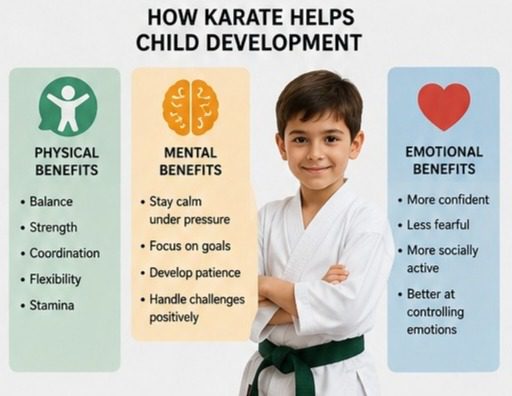
Physical Benefits
Karate improves:
- Balance
- Strength
- Coordination
- Flexibility
- Stamina
Karate helps children improve balance, strength, coordination, flexibility, and stamina through regular movement and structured exercises. It also encourages active lifestyles, especially for children who spend too much time indoors or using screens daily.
Mental Benefits
Karate teaches children how to:
- Stay calm under pressure
- Focus on goals
- Develop patience
- Handle challenges positively
Karate teaches children how to stay calm under pressure, focus on goals, develop patience, and approach challenges with a positive mindset. These mental skills often support better academic performance, stronger concentration, and improved behavior at home and school.
Emotional Benefits
Children who practice karate regularly often become:
- More confident
- Less fearful
- More socially active
- Better at controlling emotions
Children who practice karate regularly often become more confident, socially active, emotionally controlled, and less fearful in daily situations. The achievement of learning new skills and earning belts also gives children a strong sense of pride and self-belief over time.
Is Karate Safe for Kids?
Karate is generally considered a safe activity for children when training is conducted under qualified instructors in a professional environment. Beginner karate classes for kids usually focus on controlled movements, discipline, balance, fitness, and safety rules rather than aggressive contact. Instructors teach children how to practice techniques responsibly while respecting their classmates and maintaining self-control.
Compared to many competitive sports, beginner karate programs often have lower injury risks because classes are highly supervised and structured according to age groups. For parents searching for trusted karate kids Faisalabad programs, choosing a reputable karate academy with experienced instructors and proper safety standards is one of the most important steps to ensure a positive learning experience for their child.
What Parents Should Look for in a Karate School
Choosing the right karate academy is extremely important for a child’s learning experience and safety. Parents should look for qualified instructors who have experience teaching children in a supportive and professional manner. A good karate school should provide structured classes, age-appropriate training methods, and proper safety standards.
A positive environment that encourages discipline without harshness. For families searching for trusted karate kids Faisalabad programs, visiting the academy, observing classes, and speaking with instructors can help ensure the child joins a safe and motivating learning environment.
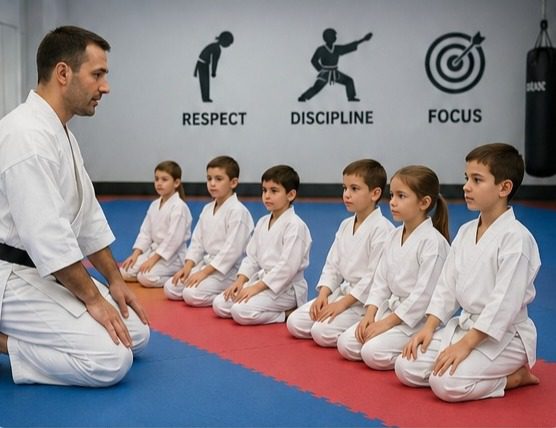
Here are key things parents should evaluate:
Qualified Instructors
Look for instructors experienced in teaching children, not just martial arts techniques.
Child-Friendly Environment
Classes should be supportive, encouraging, and age-appropriate.
Structured Curriculum
A good karate school follows a clear learning system with belt progression and skill development.
Clean and Safe Training Area
Safety and hygiene are essential for children’s training environments.
Positive Teaching Style
Avoid schools that rely on fear or harsh discipline methods.
Karate vs Other Activities for Kids
Parents often compare karate with activities like football, swimming, gymnastics, or cricket when choosing the right extracurricular program for their children. While all physical activities offer health benefits, karate provides a unique combination of fitness, discipline, confidence building, focus, and self-defense skills. Unlike many sports that focus mainly on competition, karate also emphasizes respect, patience, emotional control, and character development.
Children learn how to set goals, stay consistent, and improve themselves step by step through belt progression and regular practice. This balanced approach makes karate more than just a physical activity it becomes a valuable life skill that supports both mental and physical development. For families exploring the best age for karate, understanding these long-term benefits can help them make a more informed decision for their child’s growth and confidence.
Final Thoughts
Choosing the best age for karate depends on your child’s readiness, maturity, and interest level. For most children, ages 4 to 6 provide an excellent starting point, but older children can also benefit greatly from martial arts training. Karate helps children become stronger physically, mentally, and emotionally. It teaches discipline, confidence, focus, and respect, qualities that support long-term personal growth.
For parents searching for quality karate kids Faisalabad training programs, the most important step is finding a supportive academy with experienced instructors and a positive learning environment. Starting karate early can give children valuable life skills that extend far beyond the training mat.
Common Questions Parents Ask
No. Proper karate training actually teaches self-control, discipline, and respect. Children learn how to avoid conflict rather than create it.
For beginners, 2 to 3 classes per week are usually enough for consistent progress.
Absolutely. Karate is excellent for both boys and girls and helps build confidence, fitness, and self-defense awareness.
Yes. Many shy children become more confident and socially comfortable after joining karate classes.