
When parents start searching for the best martial arts for kids, two names usually come up first: Karate and Taekwondo. Both are popular worldwide, both teach discipline and self-defense, and both help children stay active and confident.
But many parents still ask the same question: Karate vs Taekwondo-which one is actually better for kids? The answer depends on your child’s personality, goals, learning style, and physical interests. Some kids enjoy strong hand techniques and structured discipline, while others love fast kicking movements and energetic training sessions.
In this guide, we’ll compare Karate and Taekwondo in detail, including:
- Training style
- Benefits for children
- Self-defense effectiveness
- Confidence and discipline development
- Physical fitness improvements
- Which martial art is easier for beginners
- Which one is safer for kids
By the end of this guide, you will clearly understand the key differences between Karate and Taekwondo, including their training style, benefits, and suitability for different types of children. This will help you make a confident and informed decision about which martial art matches your child’s personality, energy level, and long-term development needs.
What Is Karate?
Karate is a traditional Japanese martial art that focuses on self-defense, discipline, and mental development. It teaches children how to use punches, kicks, blocks, and controlled movements to defend themselves while also improving focus and respect.
- Punches
- Blocks
- Kicks
- Strikes
- Self-defense techniques
- Discipline and mental focus
Karate classes usually emphasize controlled movements, respect, patience, and proper technique. Children learn how to defend themselves while also improving concentration and emotional control.
Many parents choose Karate because it creates a balanced combination of:
- Physical fitness
- Discipline
- Respect
- Confidence
- Self-control
Karate training often includes:
- Forms (Kata)
- Partner drills
- Basic sparring
- Strength and coordination exercises
In Karate training, kids learn structured techniques through practice, forms (Kata), and controlled sparring. It is not just about fighting skills but also about building confidence, patience, self-control, and strong character.
What Is Taekwondo?
Taekwondo is a Korean martial art known for its fast-paced kicking techniques and athletic movement. It is one of the most popular martial arts for children worldwide.
Taekwondo focuses heavily on:
- High kicks
- Jumping kicks
- Speed
- Agility
- Flexibility
- Coordination
Kids who enjoy energetic activities often love Taekwondo because classes are exciting, fast-moving, and physically engaging.
Taekwondo training also teaches:
- Respect
- Discipline
- Confidence
- Goal setting
- Perseverance
Many Taekwondo schools use a belt progression system that motivates children to stay consistent and work toward achievements.
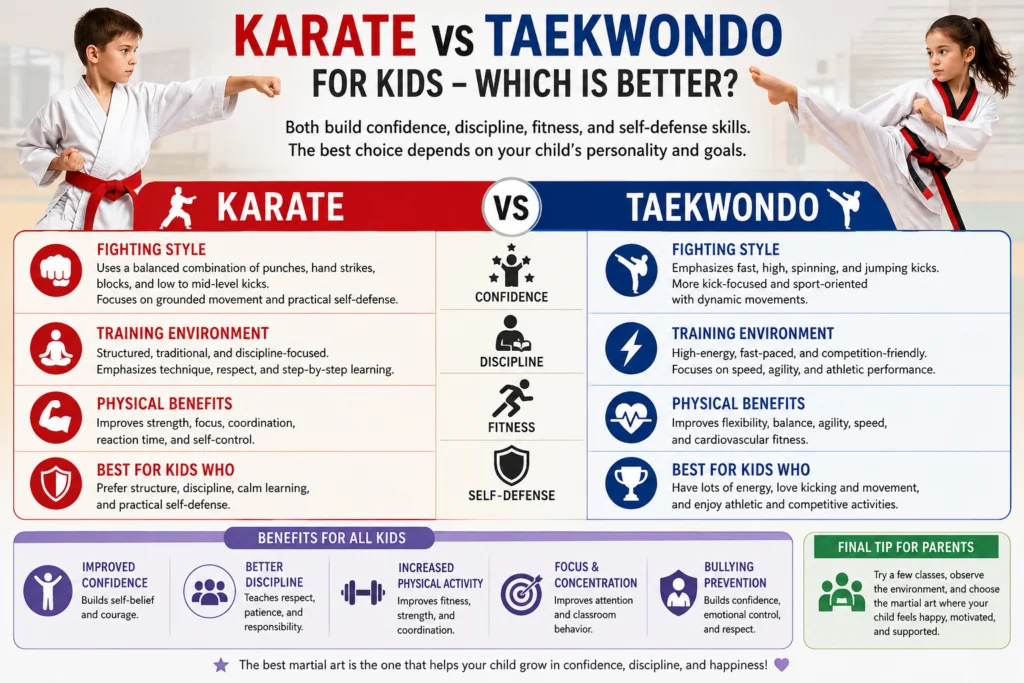
Karate vs Taekwondo: Main Differences
1. Fighting Style
The main difference between Karate and Taekwondo starts with their fighting style. Karate focuses on a balanced mix of hand strikes, punches, blocks, and low to mid-level kicks, making it more grounded and practical for self-defense. On the other hand, Taekwondo is more kick-oriented, emphasizing fast, spinning, and jumping techniques with dynamic and athletic movements.
2. Training Environment
In terms of training environment, Karate classes are usually more structured, traditional, and discipline-focused, helping children learn techniques step by step. Taekwondo classes are generally high-energy, fast-paced, and competition-driven, which often suits energetic kids who enjoy active sports, while calmer children may feel more comfortable in Karate.
3. Physical Benefits
When it comes to physical benefits, both martial arts improve overall fitness but in different ways. Karate helps build strength, focus, coordination, reaction time, and self-control, while Taekwondo mainly develops flexibility, balance, agility, speed, and cardiovascular fitness.
Which Martial Art Is Better for Self-Defense?
When discussing karate vs taekwondo, many parents specifically care about self-defense. Karate is often considered slightly more practical for real-world self-defense because it focuses on:
- Hand techniques
- Defensive reactions
- Close-range combat
- Controlled strikes
Taekwondo is excellent for:
- Distance control
- Fast movement
- Timing
- Athletic reaction
However, for children, the biggest self-defense benefit is usually confidence, awareness, and discipline rather than fighting ability alone. A confident child who understands boundaries and respect is less likely to become a target for bullying.
Which Is Easier for Kids to Learn?
Karate vs Taekwondo are both beginner-friendly for kids, but the learning experience depends on the child’s age, personality, and interests. Karate usually feels easier for children who prefer slow, structured learning, while Taekwondo feels easier for kids who enjoy active movement and fast-paced training.
Karate May Be Better For:
- Shy children
- Kids needing focus and discipline
- Beginners who prefer a slower learning progression
Taekwondo May Be Better For:
- Energetic kids
- Athletic children
- Kids who enjoy movement and sports
Most martial arts schools offer beginner classes specifically designed for children ages 4–12. The instructor’s teaching style often matters more than the martial art itself.
Benefits of Martial Arts for Kids
Whether a child chooses Karate or Taekwondo, both martial arts offer long-term physical, mental, and emotional benefits. They help shape a child’s personality positively and healthily.
1. Improved Confidence
Martial arts help kids overcome fear, build courage, and believe in themselves. Earning belts and learning new skills creates a strong sense of achievement.
2. Better Discipline
Children learn respect, listening skills, patience, consistency, and responsibility during training. This discipline naturally improves their behavior at school and at home over time.
3. Increased Physical Activity
Martial arts keep kids physically active and reduce excessive screen time. It improves their fitness, balance, coordination, and overall strength in a fun and engaging way.
4. Focus and Concentration
Structured drills and movement patterns improve attention span and listening skills. Many parents notice better classroom behavior after consistent martial arts training.
5. Bullying Prevention
Martial arts teach children confidence, emotional control, and respectful communication. This helps them stay calm in difficult situations and avoid unnecessary conflicts instead of reacting aggressively.
Karate vs Taekwondo for Confidence
Both Karate and Taekwondo help build confidence in children, but in different ways. Karate develops inner control and calm confidence, while Taekwondo builds energetic and performance-based confidence through movement and action.
Karate Confidence Development
Karate builds confidence by improving discipline, focus, and emotional control. Children learn how to stay calm under pressure, which helps them develop strong mental confidence and self-control in daily life.
Karate often builds:
- Inner discipline
- Calm confidence
- Mental focus
- Emotional control
Taekwondo Confidence Development
Taekwondo builds confidence through physical activity, speed, and expressive movements. Kids gain confidence by performing kicks, techniques, and participating in competitions or demonstrations.
Taekwondo often builds:
- Athletic confidence
- Physical expression
- Energy and motivation
- Performance confidence
Children who enjoy performing and movement may thrive in Taekwondo competitions and demonstrations.
Which Martial Art Is Safer for Kids?
Safety depends more on:
- The instructor
- Proper supervision
- Age-appropriate training
- Protective equipment
Both Karate and Taekwondo are generally safe when taught professionally.
Good martial arts schools focus on:
- Controlled training
- Respect
- Technique
- Injury prevention
Parents should always observe a trial class before enrolling their child.
Look for instructors who:
- Work well with children
- Encourage positive behavior
- Maintain a safe environment
- Focus on development rather than aggression
How to Choose the Best Martial Art for Your Child
Choosing the right martial art depends on understanding your child’s personality, energy level, and interest in learning style. If your child enjoys structure and calm learning, Karate may be a better fit, while energetic and active children often connect more with Taekwondo.
Choose Karate If Your Child:
- Needs discipline and focus
- Prefers structured learning
- Wants practical self-defense
- Enjoys calm environments
Choose Taekwondo If Your Child:
- Has lots of energy
- Loves kicking and movement
- Enjoys athletic activities
- Likes fast-paced classes
The best approach is often to try a few beginner classes before making a decision. Many children naturally connect with one style more than the other.
What Age Should Kids Start Martial Arts?
Most martial arts schools allow children to start training around the age of 4 to 6 years. At this early stage, classes are usually focused on basic movement, coordination, listening skills, and fun physical activities rather than advanced techniques.
As children grow older, they gradually learn more structured training, discipline, and self-defense skills. Starting at a young age helps build strong foundations of confidence, focus, and healthy habits that benefit them in school and daily life.
Final Verdict: Karate vs Taekwondo – Which Is Better?
There is no clear winner between karate vs taekwondo because both are excellent for kids in different ways. The best choice depends on your child’s personality, energy level, and learning style.
Karate may be better for: Karate is ideal for children who need structure, discipline, and focused learning. It also builds strong fundamentals for self-control and practical self-defense.
- Discipline
- Focus
- Traditional self-defense
- Structured learning
Taekwondo may be better for: Taekwondo suits energetic kids who enjoy fast movement, kicks, and athletic training. It helps improve flexibility, speed, and physical confidence.
- Athletic movement
- Flexibility
- High-energy kids
- Competitive sports
Ultimately, the best martial arts for kids is the one that: The best martial art is the one that keeps your child engaged and motivated. It should build confidence, discipline, and a positive learning habit over time.
- Keeps them engaged
- Builds confidence
- Encourages discipline
- Helps them enjoy learning
A supportive instructor and positive environment matter far more than the style itself. If possible, visit local martial arts schools, watch classes, and let your child experience both Karate and Taekwondo before deciding. The right martial art can help children develop confidence, respect, fitness, and life skills that benefit them for years to come.
Conclusion: Karate vs Taekwondo – Final Thoughts
In the end, there is no single winner in the karate vs taekwondo debate because both martial arts offer powerful benefits for children. Karate is ideal for building discipline, focus, and practical self-defense skills, while Taekwondo is perfect for improving flexibility, speed, and athletic confidence.
The best martial art for kids is the one that matches their personality and keeps them motivated to learn consistently. A calm, structured child may enjoy Karate more, while an energetic, active child may connect better with Taekwondo. Most importantly, the quality of the instructor and training environment plays a bigger role than the style itself.
A supportive, safe, and encouraging class helps children grow in confidence, respect, and discipline. If possible, parents should allow their child to try both styles before making a final decision. This ensures the child chooses a path they truly enjoy and can continue long-term, gaining lifelong benefits in fitness, confidence, and personal development.
FAQs: Karate vs Taekwondo for Kids
Both are great for kids, but Karate is better for discipline and structured learning, while Taekwondo is better for energetic and athletic children. The best choice depends on your child’s personality.
Yes, but it’s usually better for kids to focus on one martial art first. Once they build strong basics, they can explore other styles later if they want.
Both Karate and Taekwondo build confidence in different ways. Karate builds calm and disciplined confidence, while Taekwondo builds energetic and performance-based confidence.
Karate is often considered slightly more practical for close-range self-defense, while Taekwondo is better for distance control, speed, and reaction timing. However, confidence and awareness matter more than techniques alone for kids.
Both are equally safe when taught by a qualified instructor. Safety depends more on proper supervision, training methods, and use of age-appropriate practice than the martial art itself.
Most children can start martial arts between the ages of 4 to 6. At this stage, training focuses on basic movement, coordination, and fun activities rather than advanced techniques.